How to Scarify Your Lawn Without a Scarifier
Also known as lawn scarification or dethatching, scarifying is a vital part of lawn maintenance. While many gardeners use mechanical scarifiers, you don’t need one to give your lawn a healthy boost. With a few simple tools and the right technique, you can scarify your lawn by hand and enjoy a lush, green garden.
What Is Scarification and Why Is It Important?
Scarification removes dead organic matter, moss, and thatch that can build up on your lawn over time. This layer of debris can block sunlight and prevent nutrients from reaching the soil, leading to patchy grass and poor growth. By scarifying, you aerate the soil, improve nutrient circulation, and prepare your lawn for overseeding or fertilising.
When Should You Scarify Your Lawn?
For best results, scarify twice a year:
-
Spring: Early April is ideal to prepare your lawn for summer. Ensure the soil is dry to avoid damaging the turf. Spring scarification helps control thatch and promotes strong growth.
-
Autumn: September is the best time to scarify before winter. Removing built-up moss and thatch now helps the lawn recover quickly and reduces problems from weed seeds. Autumn scarification may require extra passes to tackle heavier debris.
Preparing Your Lawn for Scarification
-
Wait until the soil is dry. Wet soil can clump, tear grass, and slow recovery.
-
Mow your lawn short. Cutting to the lowest safe setting makes it easier to access the soil.
-
Remove debris after mowing for a clean surface to work on.
Manual Lawn Scarification: Step by Step
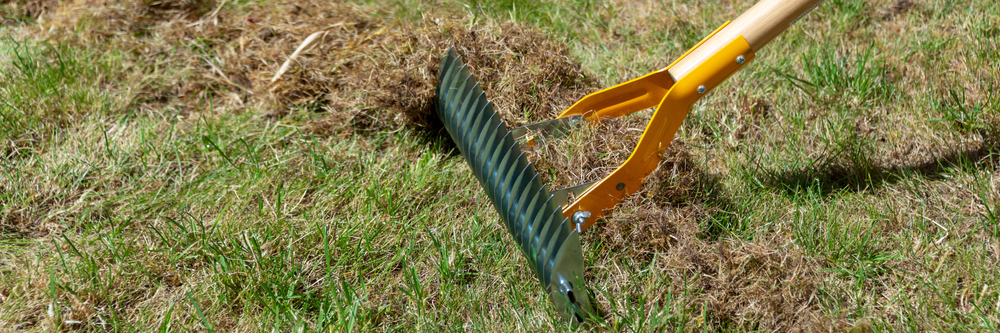
Even without a scarifying machine, a rake can do the job effectively.
-
Spring:
-
Rake your lawn in straight rows to gently lift moss and thatch.
-
Collect debris in a wheelbarrow or green bin.
-
For deeper scarification, apply slight pressure, push the rake into the soil, and switch directions to catch remaining debris.
-
-
Autumn:
-
Repeat the same method, making additional passes if the lawn has heavy thatch or moss.
-
Finish when all visible debris is removed.
-
Should You Aerate After Scarifying?
Scarifying removes surface debris but doesn’t fully aerate the soil. If you plan to overseed or fertilise, aerating a few days after scarifying is ideal. Aeration creates small holes in the soil, allowing air, water, and nutrients to reach grass roots. Autumn is the optimal time due to soil moisture and warmth.
Raking vs Scarifying
While both raking and scarifying remove debris, scarification penetrates deeper into the soil and thatch layer. This promotes better aeration and healthier grass, whereas raking only clears surface debris.
Final Tip
Scarifying your lawn by hand is gentle, effective, and accessible to any gardener. By removing thatch, moss, and organic buildup, you’re setting your grass up for a stronger, greener future — all without needing a mechanical scarifier
Lawn Seed from Boston Seed
Once you have prepped and scarified your lawn, it is important to choose the right grass seed for you lawn, for example, if you have a shaded garden, then it crucial to choose a lawn seed that thrives in the shade or is you have children or dog, then choosing a hard wearing lawn seed is important. If your current lawn just needs a bit of care, then our lawn repair grass seed can get your lawn back to looking it's best.
Use our handy comparison table to easily find the right mix for you.
Please feel free to get in touch with our friendly experts who'll be happy to help you.