


Dual Purpose Wildflower Seed Mix BSXP 100%
Use the BSXP 100% wildflower seed mixture to create a diverse and colourful wildflower meadow. Contains bold annual species for impact after sowing, as well perennials to provide longevity.
- Contains 28 beautiful wildflower species - corncockle, poppy, selfheal, cowslip, yellow rattle
- First year colour from 30% of bold cornfield annuals
- Perennials begin flowering in the second year
- Developed on our own research and development site
- Contains native wildflowers produced from provenance-assured, wild UK meadow collections
- Sow at 3 grams per sq/m. 1kg covers 330sq/m
| Common Name | Latin Name | Quantity | Flowers | Height | Type | |
|---|---|---|---|---|---|---|
| 1 | Lady's Bedstraw | Galium verum | 4.2% | Jun - Sep | 50 - 80cm | Perennial |
| 2 | Black Medick | Medicago lupulina | 4.9% | May - Oct | 15 - 80cm | Annual |
| 3 | Salad Burnet | Sanguisorba minor | 5.6% | Jun - Sep | 15 - 50cm | Perennial |
| 4 | Meadow Buttercup | Ranunculus acris | 4.2% | May - Jun | 30 - 100cm | Perennial |
| 5 | Red Campion | Silene dioica | 4.2% | Apr - Sep | 60 - 90cm | Perennial |
| 6 | White Campion | Silene alba | 3.5% | May - Oct | 50 - 100cm | Perennial |
| 7 | Wild Carrot | Daucus carota | 2.8% | Jun - Oct | 30 - 100cm | Perennial |
| 8 | Catchfly, Night-Flowering | Silene noctiflora | 3.5% | Jun - Aug | 20 - 100cm | Annual |
| 9 | Corn Chamomile | Anthemis arvensis | 4.5% | Jun - Jul | 30 - 50cm | Annual |
| 10 | Wild Clary | Salvia verbenaca | 3.5% | May - Aug | 30 - 40cm | Perennial |
| 11 | Corn Cockle | Agrostemma githago | 13.5% | May - Aug | 50 - 70cm | Annual |
| 12 | Cornflower | Centaurea cyanus | 6% | Jun - Oct | 20 - 80cm | Annual |
| 13 | Cowslip | Primula veris | 0.7% | Apr - May | 15 - 30cm | Perennial |
| 14 | Ox-eye Daisy | Leucanthemum vulgare | 2.1% | May - Sep | 20 - 100cm | Perennial |
| 15 | Field Forget-me-not | Myosotis arvensis | 2.8% | May - Jul | 20 - 40cm | Annual |
| 16 | Wild Foxglove | Digitalis purpurea | 2.8% | Jun - Aug | 50 - 100cm | Biennial |
| 17 | Goatsbeard | Tragopognon pratensis | 2.8% | Jun - Aug | 30 - 90cm | Perennial |
| 18 | Common Knapweed | Centaurea nigra | 4.2% | Jun - Sep | 30 - 80cm | Perennial |
| 19 | Greater Knapweed | Centaurea scabiosa | 2.8% | Jun - Sep | 50 - 90cm | Perennial |
| 20 | Corn Marigold | Chrysanthemum segetum | 4.5% | Jun - Oct | 30 - 50cm | Annual |
| 21 | Musk Mallow | Malva moschata | 2.1% | May - Sep | 20 - 150cm | Perennial |
| 22 | Common Poppy | Papaver rhoeas | 1.5% | May - Jul | 50 - 70cm | Annual |
| 23 | Self-heal | Prunella vulgaris | 3.5% | Jun - Sep | 15 - 30cm | Perennial |
| 24 | Common Sorrel | Rumex acetosa | 3.5% | May - Jul | 30 - 100cm | Perennial |
| 25 | St John's-wort, Common | Hypericum perforatum | 1.4% | Jun - Sep | 30 - 90cm | Perennial |
| 26 | Yarrow | Achillea millefolium | 1.4% | Jun - Oct | 20 - 100cm | Perennial |
| 27 | Yellow Rattle | Rhinanthus minor | 3.5% | Jun - Sep | 20 - 50cm | Annual |

Prepare the Ground for Wildflower Seeds
- Our Dual Purpose Wildflower Seed Mix performs best in low nutrient soils, which haven’t been heavily fertilised in the past
- For best results sow into bare soil after clearing all existing plants and weeds from the area
- Cultivate the ground to a depth of 10cm to relieve compaction and create a fine level tilth, free from obstructions (to allow for mowing at a later stage)
- Finish the seedbed by treading or lightly rolling the area
- Where weeds have been prevalent, allow a flush of weeds to germinate and remove these before sowing wildflower seeds
- In areas of high fertility, it may be necessary to remove the topsoil and sow into the subsoil. High nutrient soils encourage weeds and fast growing grasses which may outcompete wildflowers
Grassland
- This dual purpose wildflower seed mix can be used to overseed into existing grassland, provided the sward comprises only fine leaved grasses and does not include ryegrass, agricultural species or weeds. If overseeding into grass, it is best to sow during autumn when grass growth has slowed down.
- Cut the grass as short as possible and thoroughly scarify or rake the ground to remove any thatch, moss and other debris from the area.
Sowing Wildflower Seeds
- This pure wildflower seed mix should be sown between March and October
- Spring and autumn provide ideal conditions as moisture and warmth are in good supply
- Distribute seed with a handheld spreader, at the recommended sowing rate of 3g/sqm
- For best results mix the wildflower seeds with an inert carrier (such as sharp sand), at a ratio of four parts sand to one part seed (by weight). This makes it easier to achieve an even distribution and also provides a visual marker, making it easier to see any missed patches and avoid seeding areas twice.
- Regularly mix the seed when sowing, as seeds will naturally separate due to variations in size and weight.
- Once sown, ensure good ‘seed to soil’ contact by lightly raking to a depth of 0.5cm or rolling / treading the area.
Sowing Rate for Wildflower Seeds
- The sowing rate of 3g/sqm is designed to produce optimum results
- Reducing the sowing rate is likely to result in invasion from weed species
- Increasing the sowing rate generally leads to reduced diversity as the more aggressive species will outcompete slower growing plants
- This rate also applies when overseeding into grassland as many seeds may fail to germinate due to the increased competition from the existing grasses, and some seeds not reaching the soil surface
First Year Wildflower Maintenance
BSXP contains many perennial species, which can be slow to establish and are unlikely to flower in the first year. However the 30% of annual species (Cornflower, corn camomile, corn marigold, field poppy forget-me-not and black medick) will generally flower in year one. During the first year remove any weeds which grow before they run to seed, either by topping, mowing or by hand for smaller areas. Weed growth is common due to the action of disturbing the ground (rather than being caused by contaminated seed mixtures). The area can be cut once the flowers have died back in the autumn. We recommend leaving the area undisturbed for as long as possible, ideally until February / March (before the first spring growth). The dead flowers and stems provide a diverse environment which is a haven for wildlife through the winter months. In particular, it provides habitat for butterflies such as the Red Admiral and the Clouded Yellow which remain in their chrysalis during the winter months. Cut the area down to around 10cm using a scythe, strimmer or mower, leaving the cuttings for up to a week before removing. This will allow them to dry and shed seeds back into the soil.
Second Year Wildflower Maintenance
After twelve months the sward should be well established and requires little additional maintenance. Simply follow the same annual cut pattern (either in spring or autumn depending on your preference). As an ongoing process, observe and remove any weeds which invade the area. Over time, some species within the mixture may become more dominant due to environmental factors and natural selection. To encourage diversity, simply reduce the number of dominant plants in order to restore the balance.
Overseeding Wildflowers
If overseeding into grassland, we recommend incorporating at least two 10cm cuts each year; at the beginning of March and November. This reduces the grass canopy, allowing light and air to reach the wildflowers and encourage growth. Where aggressive grasses are dominating, it may be necessary to employ a more regular cutting regime to ensure the wildflowers are not smothered
Delivery Information
We’re proud to offer fast and reliable delivery. Please check the delivery label on each product page for specific delivery timeframes.
Items Marked as Next Day Delivery
- Orders placed before 2pm (Mon–Fri) will be dispatched the same working day with delivery the next working day
- Orders placed after 2pm are dispatched the next working day
- Orders placed after 2pm Friday are dispatched on Monday for Tuesday delivery (excluding Bank Holidays)
- Orders for Saturday delivery must be placed by 2pm Friday
Delivery Combinations
If your order contains a combination of next day and non-next day products, please note only the products marked next day will be delivered next day. The remainder of your order will be delivered within the timescales indicated.
Orders are sent via DHL, DPD, DX, Evri and Royal Mail, plus pallet networks for orders of approximately 100kg+.
| Delivery location | Excl. VAT | Incl. VAT |
| UK inc. Islands & Channel Islands up to 2kg (seed only) | £3.33 | £3.99 |
| Standard UK Mainland Delivery | £4.99 | £5.99 |
| Saturday (England & Wales) up to 30kg* (Orders must be placed by 2pm Friday) | £12.50 | £15.00 |
| Scottish Highlands and Islands up to 30kg* | £14.00 | £16.80 |
| Isle of Man, Isles of Scilly up to 30kg* | £17.00 | £20.40 |
| Channel Islands up to 30kg* | £12.00 | £14.40 |
*please enquire for orders over 30kg to these locations.
Collections
Customers are welcome to purchase items marked as next day delivery in person from our office and distribution centre at:
Manor Road
Kirton
Boston
PE20 1PH
Additional Information
- Orders over 100kg will normally be delivered on a pallet unless specified otherwise.
- Standard delivery takes place between the hours of 8am and 6pm, Monday to Friday.
- Orders containing multiple items may be delivered separately via multiple couriers.
- Unfortunately, we are unable to deliver to Northern Ireland or Europe.
***Please Note
Dates and indications for delivery are approximate and we cannot guarantee or be held responsible for delays in delivery dates or times. We do not refund delivery charges for delayed deliveries.
Please order from us with enough lead-time to prevent any loss or disappointment resulting from the delivery date or time. Under no circumstance will we be held responsible for any loss or damage incurred through delay in order fulfilment.
Please check that you have entered the correct delivery address before completing your order as we are unable to change it once processed.
CONTACT US
For any queries relating to your order, please contact [email protected]
Customers who bought this also bought:


Our bulbs are sourced directly from the finest growers, and selected for size, quality & reliability
A bold, bright and beautiful array of mixed tulips, containing a minimum of 5 varieties selected by us to provide you with a great selection of different heights, colours and sizes. Suitable for landscaped areas or also great value for bulking up your borders.
- Height (cm): 30 - 60cm
- Bulb Size (cm): 10/12cm
- Blooms: April - June


Plants for Pollinators highlights plants selected by the RHS as scientifically proven to tackle the declines in bees, butterflies and other pollinators.
If you want bold and beautiful colour, you will love our cornfield annual wildflower seed mix. This colourful wildflower mix contains 5 British wildflower annuals to create 'instant' colour in the first year. All of our UK native wildflower seeds are carefully collected and prepared for you to the highest level of purity and tested for germination.
- Sow in spring or autumn - sprinkle on the soil and cover the seeds by raking or rolling
- Wonderful habitat for bees and butterflies or just for adding colour to gardens verges, or fields
- Wildflower species are all recommended by the RHS as 'Plants for Pollinators'
- Contains UK native wildflowers produced from provenance-assured, wild UK meadow collections
- Sow at 3 grams per sqm. 1kg sows 330 sq/m
- Contains: Corn chamomile (yellow and white), Corncockle (pink-purple), Cornflower (blue), Corn Marigold (yellow), and Poppy (red)

Our bulbs are sourced directly from the finest growers, and selected for size, quality & reliability
A beautifully selected collection of mixed dwarf daffodil and narcissi varieties, selected by us, to ensure a stunning spring display. Suitable for pots or planted areas, this mixture will contain a minimum of 5 varieties of varying heights, colours and sizes.
- Height (cm): 8 - 30cm
- Bulb Size (cm): 10/ 14cm
- Blooms: March - April

Our easiest to use spreader for simple and accurate application. No assembly required, simply fill and shake. Ideal for patching lawns, spreading wildflower seeds and applying lawn fertiliser. Versatile and lightweight with three flow settings.
- Easy to use - simply fill and shake!
- Suitable for grass seed, wildflower seed and fertilisers
- Robust and hard-wearing for long-term use
- Accurate distribution from adjustable settings:
- Setting 1 - Wildflower Seeds, Fertiliser
- Setting 2 - Grass Seed

Plants for Pollinators highlights plants selected by the RHS as scientifically proven to tackle the declines in bees, butterflies and other pollinators.
Famed for its unique and beautiful colour, with perfect pale blue petals tinted with purple in a fluffy formation. This wildflower lends itself to many colour combinations and is highly attractive to pollinators.
- Type: Annual
- Height: 30-60cm
- Flowers: June-August
- Best Sown: Autumn or Spring
- Soil Requirement: Well-drained
- Light Requirement: Full sun
- Natural Habitat: Grasslands, farmland
- Also known as: Bachelor’s Button
- Seeds per gram: 200
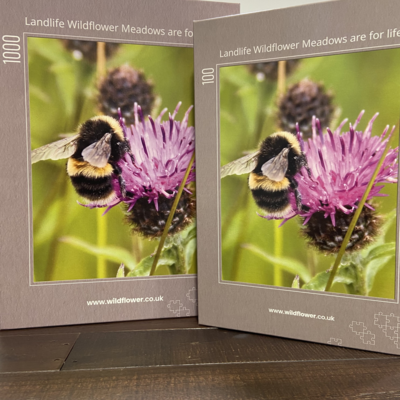
Get a BUZZ with this challenging puzzle of our friendly Bumble Bee, brought to life in this beatifuly satisfying picture. Showcasing the Bee upclose and in their natural habitat. Taking in energy from the Bold and Bright ''Knapweed''. Bees and other polinating insects are essential to our eviroment!
- Made from thick, durable board
- Completed Size (100 Piece*): 48 x 36cm
- Completed Size (1,000 Piece): 64 x 48cm
- Each puzzle is carefully enclosed in a rustic gift box
*100 Piece Puzzle suited to children 6 years and up.
Grow your own Wildflower meadow with our ''Bees and Butterfly Wildflower Seed BSBP 100%''.
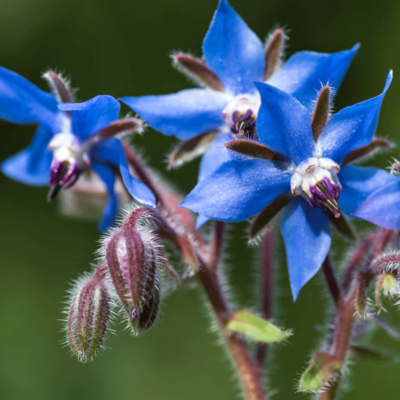
Once prized for a range of culinary uses, the Borage herb has a unique palette among wild flowers which is sure to spice up your garden. Its brilliant blue, star-shaped flowers and hairy, scarlet stems are attractive to pollinators and easy to grow with minimal fuss.
- Type: Annual
- Height: 30-60cm
- Flowers: June-September
- Best Sown: Spring
- Soil Requirement: Well-drained
- Light Requirement: Full sun and partial shade
- Natural Habitat: Forest verges, meadows
- Also known as: Starflower Cool Tankard, Tailwort
- Seeds per gram: 100

This tall-growing iris really does show its beauty off like a flag in the wind! Thin, branching stems make way for buttery yellow, three-petalled flowers and blade-like leaves. A perfect pond-side plant that’s quite water-tolerant, thought by some to be the original fleur-de-lis, a symbol of heraldry and royalty.
- Type: Perennial
- Height: 100-150cm
- Flowers: May-August
- Best Sown: Autumn or Spring
- Soil Requirement: Moist
- Light Requirement: Full sun and partial shade
- Natural Habitat: Marsh, flood planes, ditches
- Also known as: Flagon, Water Flag, Yellow Fleur-De-Lis
- Seeds per gram: 20

Perennial. A bushy meadow plant with cone-shaped spikes Aromatic perennial with masses dark purple buds turning to paler flowers. A good butterfly plant.
- Type: Perennial
- Height: 40–50cm.
- Flowers: July-September
- Soil Requirement: Well-drained, chalky
- Light Requirement: Full Sun
- Natural Habitat: Meadows, Foot Paths
- Also known as: Esparsette, French Grass, Holy Clover
Buy With Confidence

We’re dedicated to making the highest quality, professional outdoor products available to everyone to truly make the most of their outdoor spaces - lawns, gardens, landscapes, equine, sports and agriculture. Trusted by over 200,000 happy customers with a reputation for professional quality, world-class service and outstanding value for everyone, since 2002.

We take quality seriously, supplying products you can trust. Our grass seed is DEFRA-certified for purity and germination, utilising the highest quality cultivars recommended by the Sports Turf Research Institute. Wildflower products are of known UK provenance and flower bulbs are sourced directly from the finest growers in the UK and the Netherlands.

With hundreds of items available for next day delivery, we take pride in getting your order to you quickly and efficiently. Our team of dedicated experts and friendly advisors are here for you when you need them. That’s why you can call us and get straight through to an advisor from 9am-5pm, Monday to Friday, or email us for a rapid response.