
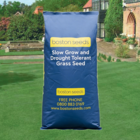




BS Slow Grow and Drought Tolerant Grass Seed
For those difficult to access areas or circumstances where a reduced mowing frequency is desired, choose BS Slow Grow and Drought Tolerant. This blend of slow growing, drought-resistant grasses can be close mown or left to grow longer to create a simple grass meadow.
- Low maintenance grass seed
- Excellent tolerance to shade, drought, dry or infertile conditions
- Performs well on sandy, free-draining soils where moisture retention is limited
- Mow close for lawn situations or as little as twice per year for general landscaping and meadow creation
- Mix with wildflower seed to create diverse grassland areas
- Contains: 25% chewings fescue, 60% strong creeping red fescue, 5% slender creeping red fescue, 7% hard fescue and 3% sheep's fescue
- DEFRA-certified for exceptionally high purity and germination
- Sow at 35 grams per sq/m for close mown areas
- 10-20 grams per sq/m for grass meadows
25% Chewings Fescue
- Fine-leaved, low-maintenance grass<
- Good shade tolerance
- Requires less frequent mowing than ryegrass
- Contributes to a dense, attractive sward
60% Strong Creeping Red Fescue
- The backbone of the mix.
- Good drought tolerance once established.
- Performs well in lower-fertility soils.
- Creeping habit helps maintain coverage over time
5% Slender Creeping Red Fescue
- Fine texture and good shade tolerance
- Helps create a denser, more ornamental appearance
- Well suited to lower-input management
7% Hard Fescue
- Particularly valuable for dry, sandy and low-fertility soils
- Very low maintenance
- Strong contributor to the drought-tolerant credentials of the mix
3% Sheep's Fescue
- Adapted to dry, nutrient-poor conditions
- Supports resilience where irrigation and fertiliser inputs are limited
- Commonly used in low-maintenance landscapes
How to sow a new lawn
1 - Clear the area
Clear the area and remove any stones, weeds and other debris.
2 - Improve the soil
Cultivate the area to a depth of 15cm and remove any debris that is unearthed. For heavy clay soils, optionally, mix in sharp sand.
3 - Create a level seed bed
Level and rake over the area. Use a lawn roller to firm the soil, if required.
4 - Allow the soil to settle
If possible, leave the soil for a week to allow a flush of weeds to come through; remove before sowing.
5 - Final ground preparation
Rake the area to loosen the top layer of soil. Apply our Pre-Seeding Lawn Fertiliser and rake into the soil.
6 - Sowing the grass seed
Spread the grass seed evenly across the area at 35g/sqm. A spreader can be used for accurate application.
7 - Rake and roll
This step is essential for successful establishment. Gently rake over the area again to incorporate the seed into the top 1-2cm of the soil, so that there is very little seed still visible on the surface. Then lightly roll or tread the seeds in to ensure good seed-to-soil contact. A harrow can be used for large areas.
8 - Water
If going through a period of drought, water the area every other evening for the first few weeks. If regular rainfall, manually watering will not be necessary.
9 - Mowing the lawn
Under optimum conditions, the seed should germinate within approximately 14-21 days. Once it reaches 3-4 inches, cut the lawn for the first time, gradually lowering the height with each subsequent cut as desired.
How to repair an existing lawn
1 - Prepare the grass
Cut the existing grass short and almost scalp the lawn with the lawn mower. Remove any dead grass, debris and thatch.
2 - Improve the soil
Scarify or rake the surface to loosen the top layer.
3 - Aerate the lawn
Optionally, to aid drainage, use a garden fork or aerator to create small holes of around 1-2 inches deep.
4 - Sow the grass seed
Spread the grass seed evenly across the area at a minimum of 20g/sqm. A spreader can be used for accurate application.
5 - Rake and roll
This step is essential for successful establishment. Gently rake over the area again to incorporate the seed into the top 1-2cm of the soil, so that there is very little seed still visible on the surface. Then lightly roll or tread the seeds in to ensure good seed-to-soil contact. A harrow can be used for large areas.
6 - Water
If going through a period of drought, water the area every other evening for the first couple of weeks. If regular rainfall, manual watering won’t be needed.
7 - Mowing the lawn
Under optimum conditions, the seed should germinate within approximately 14-21 days. Once it reaches a height of 3-4 inches, cut the lawn for the first time, gradually lowering the height with each subsequent cut as desired.
1 - Germination
The best time to sow our Slow Grow and Wildflower Companion Grass Seed is from March-October, when the soil temperature is around 8-10 degrees. Under optimum conditions, the seed should germinate within 14-21 days from sowing.
2 - Watering
Grass seed requires warmth, moisture and light to germinate. Typically, autumn will provide more favourable conditions for sowing in terms of moisture, however, if there is a period of drought, manually watering the seeds will be beneficial – this can be done every other evening to allow the moisture to soak into the soil.
3 - Mowing
Allow your lawn to grow to around 3-4 inches in height before cutting your lawn. This can be reduced by half an inch each time until you reach the desired height. An established lawn sown with our Slow Grow and Wildflower Companion Grass Seed can be cut as low as 10-20mm, or it can be left to grow tall to produce attractive seed heads. It is important to remove the grass cuttings as dead grass will prevent sunlight from getting to the new grass.
4 - Fertilisation
Regularly fertilising your lawn will provide it with the nutrients it requires to stay lush and green all year-round.
Once the lawn is four months old, you can apply our quick release fertilisers. Dependent on the time of year, choose our Spring and Summer Fertiliser or Autumn and Winter Fertiliser. Around four applications a year, with a minimum of three months between applications will provide sufficient nutrients for an established lawn.
5 - Scarifying, Aerating and Overseeding
Heavily fescue-based mixtures, such as our Slow Grow and Wildflower Companion Grass Seed, requires regular ongoing maintenance in order to keep their appearance. Ongoing fertilisation, scarifying, removing any dead thatch and mowing to a low height is essential in maintaining it’s appearance.
Both autumn and spring are good times of year to aerate and scarify your lawn, and tackle any worn areas by overseeding. Aerating your lawn is optional, but particularly useful if you have heavier clay soils where waterlogging may be a problem. Use an aerator or a garden fork to aid drainage. Scarifying is also beneficial in removing any dead grass, moss and thatch that may be hindering the growth of your existing grass.
After this process, there may be some bare patches amongst your lawn – this is the perfect time to overseed when the soil temperature is optimum and moisture is plentiful. We recommend overseeding with the same grass seed mixture as you have previously sown for a uniform appearance.
6 - Controlling Weeds
Unfortunately, as comes with seedbed preparation, weed seeds can lay dormant in the soil and it’s not until they are disturbed and the conditions are ideal, that they then can start to germinate.
If you find that weeds appear during establishment, these will generally be taken out by regular mowing once the lawn has reached around 3-4 inches in height. If the weeds are recurring, after 4 months, a Selective Weedkiller can be applied which will kill common lawn weeds, whilst leaving the existing grass unharmed.
7 - Controlling Moss
Moss can become problematic in areas that are particularly damp and shady. Moss Killer is best applied during March-October when moss is actively growing.
On a newly established area (under 5 months old), avoid using a moss killer as this will be too strong for the lawn. Instead, rake over the area to loosen and remove the moss and add further seed if required.
Once the lawn is established (over 5 months old), a moss killer can be applied such as our Lawn, Feed and Weed plus Moss Killer for light areas of moss, or our Lawn Revivor and Moss Destroyer for more heavily infested areas. After using these, the moss will turn black within a couple of weeks, rake and remove this and overseed with one of our lawn seeds.
8 - Wildflowers
Our Slow Grow and Wildflower Companion Grass Seed is the perfect companion for adding Wildflowers into the area with its combination of slower growing, attractive grass species. Adding our 100% Wildflower Seed Mixes to this grass seed will create a natural appearance perfect for pollinators. Simply cut the grass short first, rake over to loosen the top layer of the soil, then scatter the wildflower seeds with a light rake/roll after.
| Seed | Speed of Germination | Wear Tolerance | Shade Tolerance | Drought Tolerance | Disease Tolerance | Sward Density | Year Round Greenness |
|---|---|---|---|---|---|---|---|
| Economy | |||||||
| Quality Hard Wearing | |||||||
| Renovator Lawn Repair | |||||||
| Child's Play | |||||||
| Premier | |||||||
| Quality Fine | |||||||
| Shady Place | |||||||
| Slow Grow | |||||||
| Bowling & Putting Green | |||||||
| Eco-Clover | |||||||
| Winter Green | |||||||
| Prestige |
What is slow-grow grass seed?
Slow grow grass seed is a mixture of grass species that are slower growing and therefore requires less mowing and maintenance. It is perfect for those looking for grass seed in hard to reach areas or low traffic lawns, such as front gardens, and roadsides.
How often will I have to mow low maintenance grass seed?
It depends on the brand of slow growing grass seed you buy, however, our low maintenance grass seed can be mowed as little as twice a year for a meadow look. Mow more often for a more manicured appearance.
Is drought tolerant grass seed low maintenance?
Yes. Once established, drought tolerant grass seed requires less watering, fewer repairs, and generally lower maintenance compared to traditional lawn grass, making it ideal for sustainable, low-water lawns.
What makes grass drought tolerant? What is drought tolerant grass seed?
Grass seed that is drought tolerant is adapted in a way to survive in dryer conditions. Its deep roots help find water deep in the ground, they have narrow/waxy leaves that help slow moisture loss and they are also capable of going dormant to conserve energy until water returns.
Drought tolerant grass seed is specially blended from grass varieties that require less water than traditional lawn grasses. These grasses develop deeper root systems, allowing them to stay greener for longer during dry conditions and water restrictions.
How does drought tolerant grass seed save water?
Drought tolerant grass seed grows grass with deep, efficient roots that access moisture further below the soil surface. This reduces the need for frequent watering and helps create a water-saving lawn that thrives in dry climates.
How much water does drought tolerant grass seed need?
Once established, drought tolerant lawn grass typically needs significantly less watering than standard grass seed. During prolonged dry periods, it may only need occasional deep watering rather than frequent light watering.
Is drought tolerant grass seed suitable for hot and dry climates?
Yes, drought tolerant grass seed is ideal for hot, dry climates and areas prone to water restrictions. It performs especially well in regions with long summers, low rainfall, or sandy soils.
How long does drought tolerant grass seed take to establish?
Germination usually occurs within 7–21 days depending on soil temperature, weather, and grass type. Full establishment typically takes 8–12 weeks, after which the lawn becomes more drought tolerant and resilient.
Does drought tolerant grass seed go brown in drought?
Like all grasses, drought tolerant grass may slow growth or temporarily lose colour during extreme drought. However, it is designed to recover quickly and return to green once water becomes available.
Is drought tolerant grass seed suitable for pets and children?
Yes. Drought tolerant grass seed produces a durable lawn that is safe for pets and children. Its strong root system also helps the lawn recover more quickly from wear and tear.
Can I overseed my existing lawn with drought tolerant grass seed?
Yes, overseeding with drought tolerant grass seed is a great way to improve your lawn’s water efficiency. It helps introduce hardier grass varieties that gradually reduce overall water requirements.
Will drought tolerant grass seed still look good?
Yes, drought-tolerant lawn seed can still look good. It is important to choose a quality seed provider to get the best quality grass seed that will produce a healthy looking lawn.
Delivery Information
We’re proud to offer fast and reliable delivery. Please check the delivery label on each product page for specific delivery timeframes.
Items Marked as Next Day Delivery
- Orders placed before 2pm (Mon–Fri) will be dispatched the same working day with delivery the next working day
- Orders placed after 2pm are dispatched the next working day
- Orders placed after 2pm Friday are dispatched on Monday for Tuesday delivery (excluding Bank Holidays)
- Orders for Saturday delivery must be placed by 2pm Friday
Delivery Combinations
If your order contains a combination of next day and non-next day products, please note only the products marked next day will be delivered next day. The remainder of your order will be delivered within the timescales indicated.
Orders are sent via DHL, DPD, DX, Evri and Royal Mail, plus pallet networks for orders of approximately 100kg+.
| Delivery location | Excl. VAT | Incl. VAT |
| UK inc. Islands & Channel Islands up to 2kg (seed only) | £3.33 | £3.99 |
| Standard UK Mainland Delivery | £4.99 | £5.99 |
| Saturday (England & Wales) up to 30kg* (Orders must be placed by 2pm Friday) | £12.50 | £15.00 |
| Scottish Highlands and Islands up to 30kg* | £14.00 | £16.80 |
| Isle of Man, Isles of Scilly up to 30kg* | £17.00 | £20.40 |
| Channel Islands up to 30kg* | £12.00 | £14.40 |
*please enquire for orders over 30kg to these locations.
Collections
Customers are welcome to purchase items marked as next day delivery in person from our office and distribution centre at:
Manor Road
Kirton
Boston
PE20 1PH
Additional Information
- Orders over 100kg will normally be delivered on a pallet unless specified otherwise.
- Standard delivery takes place between the hours of 8am and 6pm, Monday to Friday.
- Orders containing multiple items may be delivered separately via multiple couriers.
- Unfortunately, we are unable to deliver to Northern Ireland or Europe.
***Please Note
Dates and indications for delivery are approximate and we cannot guarantee or be held responsible for delays in delivery dates or times. We do not refund delivery charges for delayed deliveries.
Please order from us with enough lead-time to prevent any loss or disappointment resulting from the delivery date or time. Under no circumstance will we be held responsible for any loss or damage incurred through delay in order fulfilment.
Please check that you have entered the correct delivery address before completing your order as we are unable to change it once processed.
CONTACT US
For any queries relating to your order, please contact [email protected]
Customers who bought this also bought:

Specially formulated to improve establishment of grass seed by ensuring all of the essential nutrients for germination are available in the soil. Encourages root and shoot development to promote quicker coverage.
- Incorporate this fertiliser into the soil as part of your final soil preparation before sowing your grass seed. Or, apply up to ten days after the grass seed has been sown.
- Higher phosphate levels for quicker and stronger root structure
- Nutrient release over a 4-6 week period
- Contains NPK at a ratio of 6.9.6
- Apply at 50g per sqm. Coverage: 20kg per 400sqm

The ultimate all-in-one granular lawn fertiliser to revitalise and rejuvenate your lawn, whilst also controlling moss and weeds in one easy application. Leaves your lawn looking lush and green for up to eight weeks, with all of the nutrients it needs to thrive. Make your lawn better than ever with KissMyGrass All In One Lawn Treatment.
- Contains iron to kill moss and give the grass a dark green finish
- Provides nutrients over 6-8 weeks to keep the grass lush and dense
- Apply from March to October
- Contains NPK at a ratio of 10.2.1.7 + 8%Fe + 2.4D + Mecoprop P
- Apply at 32g per sqm. 20kg will cover 625 sqm
Use plant protection products safely. Always read the label and product information before use.

This hand‑held seed and fertiliser spreader is an easy, reliable way to apply seed, fertiliser or winter grit across small areas. Lightweight and comfortable to use, it delivers smooth, even coverage.
Key Features:
- Ergonomic handle with balanced weight for comfortable use
- Even, consistent spreading
- Simple hand turning mechanism
- Ideal for areas up to 100sqm
- 4 adjustable output settings
- Adjustable spreading width of 1–4 metres, depending on crank speed and material type

This spreader is ideal for small areas or non frequent use. Easy to use and will give even coverage for areas that need seeding.
- Variable settings, able to apply grass seed, fertiliser or granular salt
- Easy to assemble
- Traditional drop spreader with on/off switch
- Capacity: 5kg seed / 10kg fertiliser
- Spread width: 41cm


Plants for Pollinators highlights plants selected by the RHS as scientifically proven to tackle the declines in bees, butterflies and other pollinators.
Famed for its unique and beautiful colour, with perfect pale blue petals tinted with purple in a fluffy formation. This wildflower lends itself to many colour combinations and is highly attractive to pollinators.
- Type: Annual
- Height: 30-60cm
- Flowers: June-August
- Best Sown: Autumn or Spring
- Soil Requirement: Well-drained
- Light Requirement: Full sun
- Natural Habitat: Grasslands, farmland
- Also known as: Bachelor’s Button
- Seeds per gram: 200

Perfect for quick and easy applications of seed and fertiliser on lawns, paddocks and orchards. Variable rate settings.
- Easy assembly, no tools required, ready to use in minutes
- Wide spread for quicker applications
- Capacity: 8kg seed / 15kg fertiliser
- Spreading pattern: 1.5 - 3 metres

Plants for Pollinators highlights plants selected by the RHS as scientifically proven to tackle the declines in bees, butterflies and other pollinators.
Our Restore & Enrich wildflower seed mixture contains carefully selected UK native wildflower species. Choose this wildflower seed mix to restore biodiversity and improve habitat. Contains 23 native British wildflower species, consisting mainly of perennial wildflowers and a handful of annual and biennial wildflower seeds to restore and enrich existing grassland. Sow this seed into existing meadows or to brighten up grassy areas.
- The seeds should be sown into the soil not onto grass leaves
- Rake or remove thatch, and reduce thick swards or lawns
- A colourful mixture of twenty-two different annual & perennial wildflowers
- All species are listed by the RHS as 'Plants for Pollinators'
- Contains native wildflowers produced from provenance-assured, wild UK meadow collections
- Sow at 3 grams per sq/m - 1kg covers 330sq/m
- Image taken in Aug, seeds sown March

Our premium spring summer lawn fertiliser contains a balanced blend of nutrients for healthy grass growth along with Iron, Magnesium and Seaweed.
- Granule lawn fertilsier soaks away in to the roots of the grass
- Iron content provides a rapid 'green up'
- Magnesium and Seaweed improve all round health of the grass
- Apply from March to October
- Contains NPK at a ratio of 12.5.5 + 1% MgO, 2% Fe and Seaweed
- Apply at 35g per sqm. 20kg will cover 575 sqm


Our bulbs are sourced directly from the finest growers, and selected for size, quality & reliability
Containing a minimum of 5 varieties, carefully selected for their range of height, colour, shape and size, our Crocus Surprise Collection is fantastic value for money. Providing a carpet of multicoloured Crocus early spring it's a great addition for any landscaping project or garden area.
- Height (cm): 8 - 15cm
- Bulb Size (cm): 5/8cm
- Blooms: February- March

Our easiest to use spreader for simple and accurate application. No assembly required, simply fill and shake. Ideal for patching lawns, spreading wildflower seeds and applying lawn fertiliser. Versatile and lightweight with three flow settings.
- Easy to use - simply fill and shake!
- Suitable for grass seed, wildflower seed and fertilisers
- Robust and hard-wearing for long-term use
- Accurate distribution from adjustable settings:
- Setting 1 - Wildflower Seeds, Fertiliser
- Setting 2 - Grass Seed

Our bulbs are sourced directly from the finest growers, and selected for size, quality & reliability
A carefully selected mixture of bold, bright and vibrant tulip bulbs will add an array of colour, height and shape to your borders and garden. This delightful tulip bulb mix will add a kaleidoscope of colour.
- Height: 45cm
- Bulb Size: 12 - 14cm
- Blooms: April
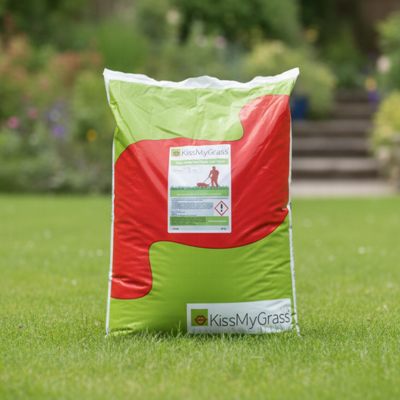
Our most powerful and potent grass feed. Formulated to dramatically improve the appearance of your lawn. Quickly see your grass turn a deep green colour in record time and with maximum effectiveness. It is ideal for lawns that need a visible boost after periods of stress, wear or poor growing conditions. It combines nitrogen, potassium and 9% iron to improve lawn colour, boost vitality and help lawns regain their healthy green appearance.
- Our most powerful tonic
- Apply from March to October
- 4% Nitrogen (N) – supports healthy grass growth and helps maintain a strong, healthy lawn
- 4% Potassium Oxide (K) – helps strengthen grass and improve resilience against stress, wear and challenging weather conditions
- 9% Iron (Fe) – enhances lawn colour, helping to create a richer, deeper green appearance
- Apply at 25-50g per sqm
- 20kg will cover 400-800 sqm
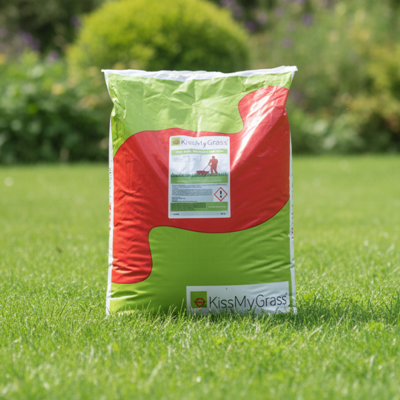
KissMyGrass Slow Release Lawn Fertiliser is a long-lasting granular lawn feed designed to provide consistent nutrition for healthy grass growth over a three-month period. Formulated from a blend of three different granules, it delivers a phased release of nutrients to help keep your lawn well-fed throughout the season, reducing the need for frequent applications. Ideal for established lawns, this slow release lawn fertiliser promotes steady growth, strong roots and a healthier lawn from spring through to autumn.
- Slow release lawn fertiliser with nutrients released over up to three months
- Contains coated granules that degrade at different rates for phased feeding
- Provides long-lasting nutrition to support healthy grass growth
- Apply from March to October
- NPK analysis 20.6.8
- 20% Nitrogen (N) – the highest proportion in the formula, helping to support strong grass growth and maintain a healthy green lawn.
- 6% Phosphorus (P) – supports root development, helping grass establish and make efficient use of available nutrients.
- 8% Potassium (K) – helps strengthen grass and improve resilience to everyday stresses such as wear, dry conditions and changing weather.
- Apply at 35g per m²
- 20kg covers up to 575m²

Plants for Pollinators highlights plants selected by the RHS as scientifically proven to tackle the declines in bees, butterflies and other pollinators.
If you want bold and beautiful colour, you will love our cornfield annual wildflower seed mix. This colourful wildflower mix contains 5 British wildflower annuals to create 'instant' colour in the first year. All of our UK native wildflower seeds are carefully collected and prepared for you to the highest level of purity and tested for germination.
- Sow in spring or autumn - sprinkle on the soil and cover the seeds by raking or rolling
- Wonderful habitat for bees and butterflies or just for adding colour to gardens verges, or fields
- Wildflower species are all recommended by the RHS as 'Plants for Pollinators'
- Contains UK native wildflowers produced from provenance-assured, wild UK meadow collections
- Sow at 3 grams per sqm. 1kg sows 330 sq/m
- Contains: Corn chamomile (yellow and white), Corncockle (pink-purple), Cornflower (blue), Corn Marigold (yellow), and Poppy (red)
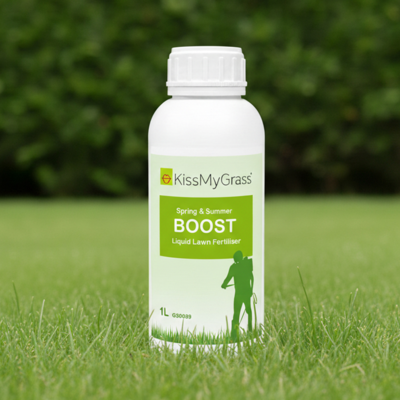
An extremely effective and direct approach for an additional boost during the summer months. Working almost instantly, our Spring & Summer Liquid Fertiliser is a great addition to your regular granular routine for instant lawn revival to promote healthy, vibrant growth.
- Encourages healthy, vibrant growth
- Apply from March-August
- For best results, apply every 2-3 weeks
- Contains NPK at a ratio of: 16.2.8
- 1 litre covers 200sqm

The most versatile of our range of liquid fertilisers, our Year Round Rapid Green greens up within as little as 24 hours and helps to promote a rich-green colour without the growth. This product is powerful liquid iron, plus magensium for a quick and long-lasting green up.
- Rapid green-up in 24 hours
- Apply from March to November
- For best results, apply every 2-3 weeks
- Contains: 4.0.2 + 4% MgO + 1% Fe
- 1 litre covers 200sqm

Invite solitary bees into your garden with this charming bee hotel. Crafted from eco-friendly FSC-certified timber, it provides a safe, sturdy home where pollinators can nest, rest, and thrive. A delightful way to support hardworking bees while adding character to your outdoor space.
- Made for solitary bees to rest & nest.
- Made from eco-friendly FSC certified timber.
- Dimensions: 21cm x 18cm x 10cm.
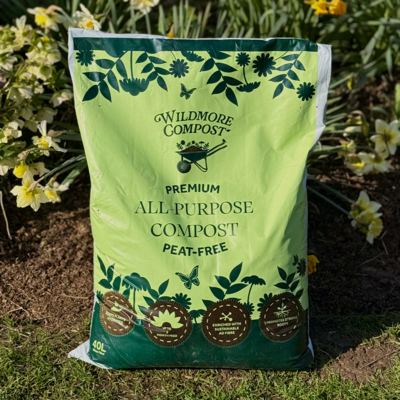
Peat-free compost that actually works! Wildmore’s premium All-Purpose Peat-Free Compost has been carefully crafted on a family farm in Lincolnshire with premium organic matter, destined to give healthier plants, stronger roots and exceptional growing results. It delivers reliability, quality, and performance without compromise on sustainability. Whether planting up beds, pots, borders, vegetables, flowers or containers, Wildmore Compost gives plants the structure, stability and nutrients they need to flourish.
- Premium peat-free compost that provides feed for 8-12 weeks
- Developed over years with the help of scientists, growers and nurseries
- Great drainage and excellent moisture retention
- Supports healthy root development
- Suitable for home and professional gardeners
- Available in 40l packs
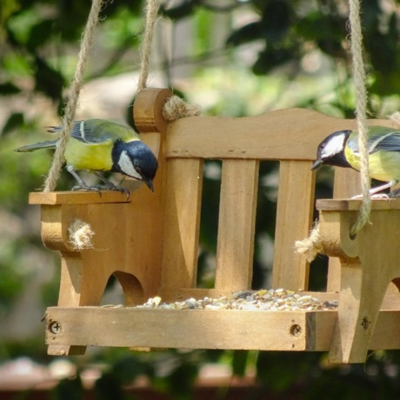
This bird feeder has been inspired by an English country house and is lovely to see swinging in the garden.
- Made from FSC certified timber
- Suitable for a range of feed types such as seeds, nuts, mealworms or scraps
- It is perfect for feeding small bird species such as robins, great tits, blue tits who are small and agile and able to land lightly on the seat, arms or backrest
- The swinging style and hanging ropes act as a deterrent to larger birds such as pigeons so the little birds can feed in peace
- Removable and washable feed tray
Buy With Confidence

We’re dedicated to making the highest quality, professional outdoor products available to everyone to truly make the most of their outdoor spaces - lawns, gardens, landscapes, equine, sports and agriculture. Trusted by over 200,000 happy customers with a reputation for professional quality, world-class service and outstanding value for everyone, since 2002.

We take quality seriously, supplying products you can trust. Our grass seed is DEFRA-certified for purity and germination, utilising the highest quality cultivars recommended by the Sports Turf Research Institute. Wildflower products are of known UK provenance and flower bulbs are sourced directly from the finest growers in the UK and the Netherlands.

With hundreds of items available for next day delivery, we take pride in getting your order to you quickly and efficiently. Our team of dedicated experts and friendly advisors are here for you when you need them. That’s why you can call us and get straight through to an advisor from 9am-5pm, Monday to Friday, or email us for a rapid response.