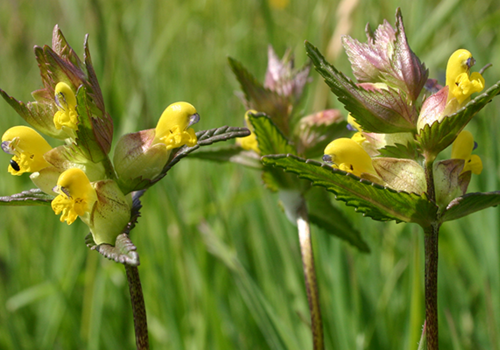
Creating a beautiful wildflower meadow not only adds colour to your garden, it also supports biodiversity, enhances the appearance and also helps the local ecosystem thrive.
One of the main challenges when creating a wildflower meadow is managing the dominance of meadow grasses, that can outcomplete the beautiful flowers. Yellow rattle, also known as Rhinanthis Minor, is a wildflower meadows best friend by naturally helping control the growth of unwanted grasses allowing the intended wildflowers to thrive.
In this blog, we explore what yellow rattle wildflowers are, what are the benefits of them and how and when to sow them.
What is yellow rattle?
Yellow rattle is a type of annual wildflower that is often used for wildflower meadow establishment and management. Yellow rattle is named after its bright yellow flowers and the rattle sound the seeds make as they mature.
What are the benefits of yellow rattle in your wildflower meadow?
Yellow rattle is popular due to the benefits it provides to wildflower meadows. We take a look at some of the benefits below.
Naturally helps control invasive grasses
Yellow rattle’s roots steal the nutrients from nearby grasses, which make the grasses less competitive against wildflowers - giving wildflowers the space and nutrients they need to thrive.
Increase biodiversity
With less grass being able to grow, it allows more wildflowers to grow alongside the yellow rattle. This wider variety of wildflowers supports more insects, birds, butterflies and other wildlife.
Low maintenance
Once yellow rattle has established itself, yellow rattle is easy to maintain while it naturally maintains the balance of a meadow reducing the need of mowing and weeding.
Is yellow rattle an annual wildflower?
Yes, yellow rattle is an annual wildflower, which means they come back year after year. Once sown, yellow rattle will bloom, die back during the colder, winter months and then they produce seed that will grow into plants again the next year. Annual wildflowers are often quick to establish themselves.
Where to sow yellow rattle seed?
Yellow rattle prefers areas of full sunlight and well-drained soils, although it will tolerate some light shade. If the soil is particularly fertile, yellow rattle will struggle to establish and may put on more leaf growth rather than flower growth. Removing the top layer of soil or cutting and scarifying will help to bring down fertility over time.
The parasitic nature of yellow rattle helps to reduce the vigour of slow growing, meadow grasses. However, yellow rattle will struggle to reduce the vigour of fast establishing grasses such as ryegrass due to the competitive nature and rapid growth.
When to sow yellow rattle seed?
Yellow rattle seed is best sown in the autumn or winter to allow vernalization (exposure to lower temperatures) over the winter. The plant requires a period of cold to break its dormancy to flower from May onwards.
How much yellow rattle seed to sow per square metre?
When sowing yellow rattle seed on its own, we recommend it to be sown at 1g/sqm. When added into wildflower seed mixtures, yellow rattle can be sown between 0.1 - 0.5g/sqm.
How to sow yellow rattle seed?
Following the correct routine and procedures when sowing yellow rattle is important to ensure it establishes itself and grows. We’ve listed the steps of sowing yellow rattle seed below:
- Prepare the ground
Initially, cut the existing grass down as short as possible with all the cuttings removed. Rake over the area to expose approximately 50% bare earth, leaving some meadow grass there. Mechanical harrowing may be used on large areas. Being semi-parasitic, yellow rattle does need some grass within the area to grow and establish.
- Sow the seed
Spread the seed evenly across the area. Due to the seed size, we recommend mixing with sharp sand to ensure even coverage – this can be at 4 parts sand to 1 part yellow rattle seed (by weight). If mixing with sand, ensure that it is mixed thoroughly throughout the seeding process to avoid separation.
- Rake or roll the ground
After sowing, lightly rake or roll over the seed to ensure good seed to soil contact. As the size of the seed is small, seeds don’t want to be buried too deep as this will prolong or even prevent germination. For larger areas, a mechanical roller can be used.
How long does yellow rattle seed take to germinate?
Under ideal conditions, yellow rattle seedlings usually begin to emerge from February to March, following an autumn sowing. The plants will then flower from May onwards.