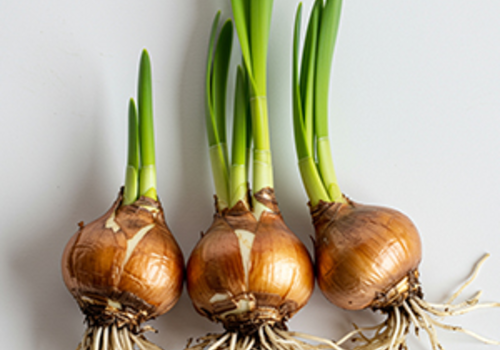
What are English Bluebells?
Bluebells are perennial wildflowers that are considered quintessentially British. English bluebells reach a height of up to 40cm (16”), and have violet-blue flowers with a sweet scent. English bluebells are one of the last spring flowers to bloom, flower from late March-May onwards.
The Difference between English and Spanish Bluebells
The English bluebell (Hyacinthoides non-scripta) is native to the UK but the Spanish bluebell (Hyacinthoides hispanica) was introduced into the country as a garden plant in the 17th century. Having ‘escaped’ into the wild, possibly by pollination or through the lax disposal of bulbs, Spanish bluebells can be found alongside the native bluebell.
Native English Bluebells |
Spanish Bluebells |
Narrow leaves (1.0-1.5cm) |
Wider leaves (3.0cm) |
Tubular bell flowers with curled back tips, violet-blue in colour and sometimes white |
Conical bell flowers with open tips, pale blue in colour and often white or pink |
Flowers on one side of an arching stem |
Flowers all round an upright stem |
Sweetly scented |
Unscented |
Pollen is cream coloured |
Pollen is blue or pale green |
When to Plant English Bluebell bulbs
English bluebell bulbs can be planted in autumn as dry bulbs but many experts agree that planting bulbs in the green (i.e. while they’re flowering), in late spring will give better results.
How to Plant Bluebell bulbs
Soil requirements – moist soil rich in organic matter is ideal. To improve poorer soil, add leaf mould or manure.
Spacing – plant bulbs in drifts, 10cm apart and at a depth of 10cm.
Maintenance – after flowering, let foliage die back (this will feed the bulb for the following growing season). Bluebells benefit from being watered during dry spells and when newly planted.
Where to plant English Bluebells
As woodland plants, English Bluebells prefer partial or dappled shade, under trees and shrubs. Bluebells can be planted in woodland or in grass but do not mow until foliage has died back.
The Law and English Bluebell bulbs
The English bluebell (Hyacinthoides non-scripta) is protected under the Wildlife and Countryside Act 198, making it illegal to be picked, uprooted or damaged. Even when on private land, English bluebells cannot be picked or uprooted without the landowner’s permission. Landowners are also prohibited from digging English bluebells up to sell them.
Why English Bluebells are Protected
As Spanish bluebells become more prevalent in the UK, there is a risk that they will outcompete native bluebells which could harm biodiversity. They are also easily damaged which makes them vulnerable to being picked or trampled, and as a bluebell colony can take several years to become established, it is important to preserve them.
Propagating Bluebells
It is against the law to dig up clumps of bluebells in the wild but to propagate garden bluebells, you can divide and replant clumps of the flowers – do this after flowering but before the foliage dies back.
Bluebells can also be grown from seed harvested from the flowers. Sow in pots but be patient as germination can take several months and the seeds will need a cold spell to get them started. You could also end up with a hybrid by doing this.
English Bluebells from Boston Seeds
Our range of autumn planted wildflower bulbs includes true, native English bluebells. These bulbs have been selected and lifted under licence from British woodland and certified as true. We also supply English bluebell bulbs as part of our Wildflower Bulbs ‘In the Green’ collection, which are to be planted in the Spring whilst they are actively in growth, allowing them to flower within justa few weeks.